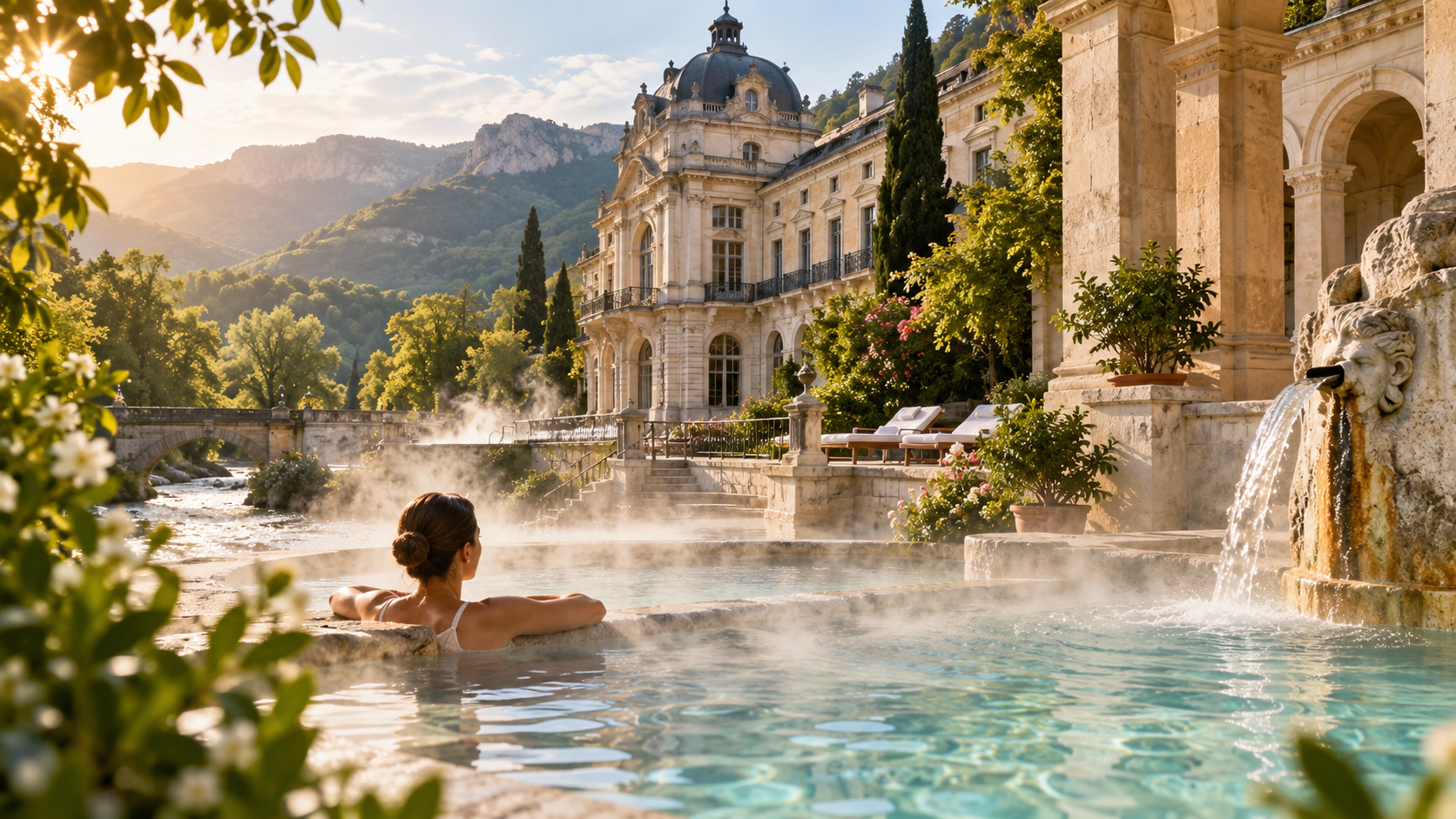
In Spain, the word balneario carries a very specific meaning. It is not simply a hotel with a Spa, pools and massage treatments. Behind the concept lies a centuries-old tradition based on the use of natural mineral-medicinal and thermal waters, together with a distinctive culture of rest, recovery and wellbeing.
Water itself is what truly distinguishes a traditional balneario from a conventional Spa.
At the heart of a balneario is a natural spring with a specific mineral composition and temperature, around which its treatments, facilities and programmes are developed. This is why two thermal hotels that may look similar can offer completely different experiences: every spring has its own identity, origin and history.
From Roman baths to the balneario tradition
The history of thermal wellbeing in what is now Spain goes back thousands of years.
The Romans made thermal bathing an important part of everyday life. Water was associated not only with hygiene, but also with relaxation, social life and care for the body. Places with natural hot and mineral springs became especially valued, and thermal complexes gradually developed around them.
Some of today’s Spanish balnearios continue this history on the very same lands where the waters were already being used in Roman times. Archena, Alange, Lugo and other thermal destinations preserve a heritage that reaches back to Antiquity.
Later, the Arab tradition brought another dimension to the culture of water. Bathhouses became places for cleansing, relaxation and social interaction, strengthening the connection between water and wellbeing across the Iberian Peninsula.
The 19th century: the golden age of the balneario
The 19th century marked one of the most important periods in the history of Spanish thermal resorts.
The development of medical hydrology, growing interest in mineral waters and the rise of leisure travel encouraged the construction of elegant hotels, galleries, gardens and bathing facilities around renowned springs.
Travelling “to take the waters” gradually became part of the European lifestyle.
Guests did not visit only for treatments. They often stayed for weeks, walked through gardens, enjoyed long meals, read, rested and escaped the pace of city life.
This created a particular resort culture in which health, rest, nature and quality of life were understood as part of one complete experience.
It is a philosophy that strongly resonates with the modern concept of Wellness.
Balneario and Spa: similar, but not the same
Today, the visual difference between the two can sometimes be less obvious.
A modern balneario may be an elegant 4★ or 5★ hotel with fine dining, swimming pools, Spa facilities, relaxation areas and sophisticated Wellness programmes.
Yet its essence remains unchanged:
in a balneario, the central natural resource is its own mineral-medicinal or thermal water.
A Spa, by contrast, can exist in almost any hotel and may use ordinary water, focusing primarily on relaxation, massage, saunas, beauty treatments and sensory rituals.
A balneario is therefore not simply a larger Spa. It is a different concept, built around the natural resources of a specific location.
What a thermal stay looks like today
Traditional balneotherapy now exists alongside a much broader approach to wellbeing.
Depending on the characteristics of the water and the specialisation of the centre, programmes may include mineral and thermal baths, hydromassage, therapeutic showers and jets, thermal pools, mud or parafango treatments, inhalation therapies, physiotherapy and massage.
Many resorts also integrate nutrition, physical activity, sleep and stress-management programmes, aesthetic treatments and more comprehensive Wellness experiences.
The modern balneario therefore brings together the historic culture of water and a contemporary approach to prevention, recovery and quality of life.
Spain: a country of many thermal identities
One of the great strengths of Spanish thermalism is its diversity.
Galicia has one of the country’s strongest thermal traditions and a particularly high concentration of natural springs. Murcia is home to historic destinations such as Balneario de Archena. Cantabria offers recognised resorts including Puente Viesgo and La Hermida, while Castilla, Asturias, Catalonia, Aragón, Extremadura, Andalusia and other regions also have their own distinctive thermal heritage.
Each balneario differs not only in its architecture or hotel category.
What changes is the water itself — its origin, mineral composition, temperature, treatments and the philosophy of the stay.
This is why choosing a balneario should not begin only with a beautiful photograph of a swimming pool.
It should begin by understanding what type of recovery and experience each guest actually needs.
At Máxima Bienestar, we see every balneario as an individual destination, with its own water, history, specialisation and character. This allows us to select not simply a hotel, but the environment and programme that best match each journey.
The balneario is one of the most distinctive traditions of Spanish Wellness: a culture in which natural water has remained, for centuries, an essential element of rest, recovery and personal wellbeing.